

Hieronymus Bosch Garden of Earthly Delights Hoopoe Bird Statue – Museum Replica, 6”H
Hieronymus Bosch Garden of Earthly Delights Hoopoe Bird Statue – Museum Replica, 6”H
SKU:JB29
In stock
Couldn't load pickup availability
Hoopoe Bird – A Surreal Hieronymus Bosch Statue from the Garden of Earthly Delights
This vivid Hieronymus Bosch statue brings the hoopoe bird from the central panel of The Garden of Earthly Delights into three-dimensional form. Bosch created birds with remarkable realism, yet he transformed them into hybrids filled with symbolic meaning. This Bosch figurine stands on a mound formed by upside-down human bodies. Their legs point upward. Their faces look outward. The figure captures Bosch’s blend of humor, tension, and moral reflection.
The bird wears a bright red cap and has a long pale beak holding a dark creature. Its blue chest with dotted yellow patterns adds charm. Yet the base shifts the mood. The cluster of bodies reflects human desire, excess, and confusion. Bosch often showed people caught between pleasure and risk. This Garden of Earthly Delights statue shows that theme in surprising detail.
Symbolism in This Hieronymus Bosch Statue
Hoopoes carried mixed meanings in medieval lore. They suggested desire and attraction. They also represented dirtiness because of their nesting habits. Bosch used this contrast to explore human choices. The bird rises from the mound like a warning. Its red cap hints at vanity. The figure in its beak may symbolize temptation that distracts the mind. This Bosch hybrid creature expresses how desire can mislead the spirit.
The bodies below form a rhythmic circle. Their placement suggests unity, but also helplessness. Bosch wanted viewers to consider the cost of indulgence. This surreal medieval art still raises the same questions. The statue allows collectors to see that tension from all sides.
The rabbit sitting on the bird’s beak adds important symbolic resonance. In medieval manuscripts and bestiaries, rabbits could signify fertility, unchecked desire, or timid vulnerability. Artists sometimes used them to comment on human impulse and moral weakness. Bosch drew on these shifting meanings to enrich his moral narratives.
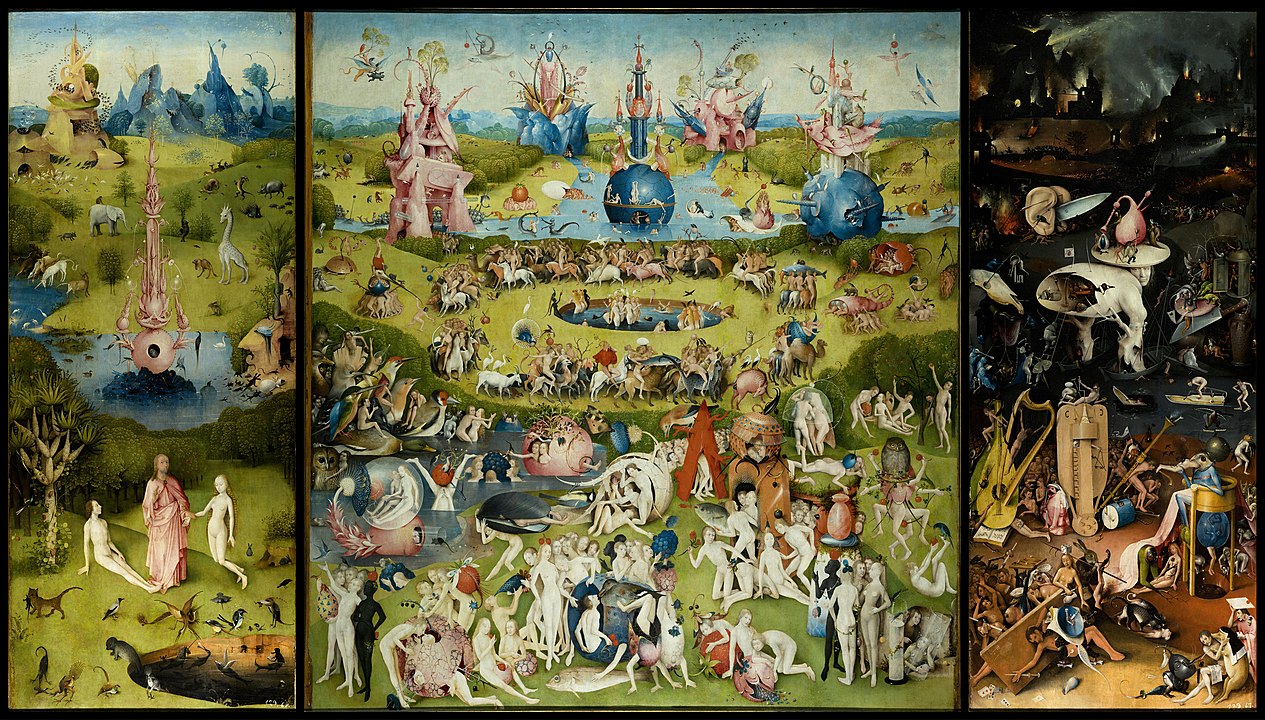
Placement in the Garden of Earthly Delights
The hoopoe bird appears in the bright central panel. This area shows humans caught in pleasure. Fruit and animals fill the scene. Bosch painted the world as joyful, but fragile. Temptation hides in beauty. This Bosch bird statue sits near scenes of desire and distraction. The human pedestal hints at the cost of careless behavior.
Parastone has adapted this moment with great care interpreting it from two dimensions into a three dimensional sculpture.
Collectors enjoy pairing this piece with other Parastone creations. Popular choices include the Egg Monster (JB10), Owl Dancer (JB28), and Helmeted Bird (JB11). Together they form a powerful Garden of Earthly Delights statue display. Bosch’s imagination becomes a full shelf of surreal figures.
- Material: Resin with hand-painted details.
- Collection: Parastone Mouseion 3D (JB29).
- Dimensions: 6 in H × 4.25 in W × 4.25 in D.
- Weight: 1.25 lbs.
- Explore more Bosch hybrids: Visit the Bosch Collection .
Northern Renaissance Context
Hieronymus Bosch lived during a moment of shifting beliefs in Northern Europe. He worked in ’s-Hertogenbosch, a thriving center of trade and religious activity. Born around 1450, he grew up in a family workshop and trained in a tradition shaped by medieval spirituality. Yet he also absorbed the early Renaissance appetite for observation, curiosity, and detail.
His art blends these worlds. Bosch used animals, hybrids, and symbolic creatures to explore moral struggle and human weakness. He questioned how people responded to temptation, fear, and desire. This Hieronymus Bosch statue continues that tradition. It invites reflection through surprise, humor, and symbolic tension, mirroring the layered messages Bosch embedded in his paintings.
For More Reading
- Learn more about Bosch's Garden of Earthly Delights on Wikipedia.
- Explore Bird Symbolism in Italian Devotional Paintings from the Thirteenth to the Seventeenth Century , an academic study with rich insight into medieval and Renaissance imagery.